
Biography
“I believe in getting into hot water: it keeps you clean.”
G.K. Chesterton
For more than two decades Andrew Nikiforuk has written about energy, economics and the West for a variety of Canadian publications including the Walrus, Maclean’s, Canadian Business, The Globe and Mail’s Report on Business, Chatelaine, Georgia Straight, Equinox and Harrowsmith.
In the late 1990s, he investigated the social and ecological impacts of intensive livestock industries and the legacy of northern uranium mining for the Calgary Herald. His public policy position papers on water diversion in the Great Lakes (2004) and water, energy and North American integration 92007) for the Program on Water Issues at the University of Toronto’s Munk Centre sparked both discussion and reform.
Nikiforuk’s journalism has won seven National Magazine Awards since 1989 and top honours for investigative writing from the Association of Canadian Journalists. His dramatic Alberta based-book, Saboteurs: Wiebo Ludwig’s War Against Big Oil, won the Governor General’s Award for Non-Fiction in 2002. Pandemonium, which exposes the impact of global trade on disease exchanges, received widespread national acclaim.
The Tar Sands: Dirty Oil and the Future of the Continent, which criticized the pace and scale of the world’s largest energy project, was a national bestseller and won the 2009 Rachel Carson Environment Book Award. It was also listed as a finalist for the Grantham Prize for Excellence In Reporting on the Environment. Empire of the Beetle, an account of how one tiny bug reshaped the geography of the west, was a Governor General’s nominee for non-fiction in 2011.
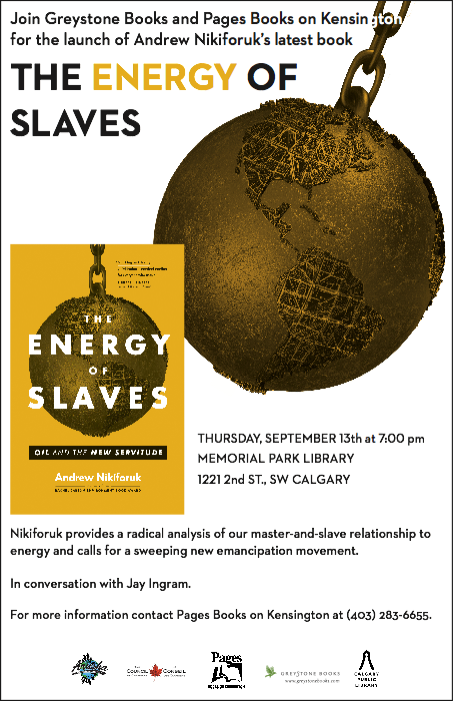
His latest book, The Energy of Slaves: Oil and the New Servitude, argues that the energy institution of slavery has shaped our careless use of fossil fuels. The radical treatise calls for a moral revolution in our attitudes towards energy consumption.
Nikiforuk and his wife and three sons, Aidan, Keegan and Torin, live in Calgary, Alberta. Whether speaking or writing about melting glaciers, educational shams, peak oil, or the destruction of the boreal forest, Nikiforuk has earned a reputation as an honest and provocative voice in Canadian journalism.
When not writing for the Tyee,
http://thetyee.ca/
Canada’s best independent newspaper, Nikiforuk is busy managing Peppino Gourmet Foods in the community of Bridgeland in Calgary, Alberta.
Disclosure: As a freelance writer and independent author I often engage in a variety of writing and speaking contracts. I have written public policy documents for the Program on Water Issues at the Munk Centre as well as two fully referenced reports for Greenpeace on bitumen and Arctic oil development. The World Wildlife Fund contracted myself and journalist, Ed Struzik, for a national tour on oil and climate change issues in 2010. A variety of universities, civil and community groups including Friends of Salmon, the Pembina Institute and the National Farmer’s Union have paid for public talks. I have also worked under contract with Tides Canada to research and deliver public information to improve the environmental footprint of Canadian oil and gas development.
Since 2008 I have advocated for a national debate about the pace and scale of tar sands development. And since 2010 I have endorsed a conservative and Norwegian-like solution to Alberta’s chaotic bitumen development. It was first articulated by former Premier Peter Lougheed and includes the following principles: Slow Down. Behave Like An Owner. Collect Our Fair Share. Save For the Rainy Day. Approve One Project At a Time. Clean Up the Mess. Add Value To the Resource. To Lougheed’s original list, I would add a national carbon tax.
Rapid tar sands development combined with the ruinous impact of petro revenues on government coffers has seriously polluted Canada’s politics and undermined its economic and environmental security. It has transformed the country into another dismal petro state.
“I believe in getting into hot water: it keeps you clean.”
G.K. Chesterton
For more than two decades Andrew Nikiforuk has written about energy, economics and the West for a variety of Canadian publications including the Walrus, Maclean’s, Canadian Business, The Globe and Mail’s Report on Business, Chatelaine, Georgia Straight, Equinox and Harrowsmith.
In the late 1990s, he investigated the social and ecological impacts of intensive livestock industries and the legacy of northern uranium mining for the Calgary Herald. His public policy position papers on water diversion in the Great Lakes (2004) and water, energy and North American integration 92007) for the Program on Water Issues at the University of Toronto’s Munk Centre sparked both discussion and reform.
Nikiforuk’s journalism has won seven National Magazine Awards since 1989 and top honours for investigative writing from the Association of Canadian Journalists. His dramatic Alberta based-book, Saboteurs: Wiebo Ludwig’s War Against Big Oil, won the Governor General’s Award for Non-Fiction in 2002. Pandemonium, which exposes the impact of global trade on disease exchanges, received widespread national acclaim.
The Tar Sands: Dirty Oil and the Future of the Continent, which criticized the pace and scale of the world’s largest energy project, was a national bestseller and won the 2009 Rachel Carson Environment Book Award. It was also listed as a finalist for the Grantham Prize for Excellence In Reporting on the Environment. Empire of the Beetle, an account of how one tiny bug reshaped the geography of the west, was a Governor General’s nominee for non-fiction in 2011.
His latest book, The Energy of Slaves: Oil and the New Servitude, argues that the energy institution of slavery has shaped our careless use of fossil fuels. The radical treatise calls for a moral revolution in our attitudes towards energy consumption.
Nikiforuk and his wife and three sons, Aidan, Keegan and Torin, live in Calgary, Alberta. Whether speaking or writing about melting glaciers, educational shams, peak oil, or the destruction of the boreal forest, Nikiforuk has earned a reputation as an honest and provocative voice in Canadian journalism.
When not writing for the Tyee,
http://thetyee.ca/
Canada’s best independent newspaper, Nikiforuk is busy managing Peppino Gourmet Foods in the community of Bridgeland in Calgary, Alberta.
Disclosure: As a freelance writer and independent author I often engage in a variety of writing and speaking contracts. I have written public policy documents for the Program on Water Issues at the Munk Centre as well as two fully referenced reports for Greenpeace on bitumen and Arctic oil development. The World Wildlife Fund contracted myself and journalist, Ed Struzik, for a national tour on oil and climate change issues in 2010. A variety of universities, civil and community groups including Friends of Salmon, the Pembina Institute and the National Farmer’s Union have paid for public talks. I have also worked under contract with Tides Canada to research and deliver public information to improve the environmental footprint of Canadian oil and gas development.
Since 2008 I have advocated for a national debate about the pace and scale of tar sands development. And since 2010 I have endorsed a conservative and Norwegian-like solution to Alberta’s chaotic bitumen development. It was first articulated by former Premier Peter Lougheed and includes the following principles: Slow Down. Behave Like An Owner. Collect Our Fair Share. Save For the Rainy Day. Approve One Project At a Time. Clean Up the Mess. Add Value To the Resource. To Lougheed’s original list, I would add a national carbon tax.
Rapid tar sands development combined with the ruinous impact of petro revenues on government coffers has seriously polluted Canada’s politics and undermined its economic and environmental security. It has transformed the country into another dismal petro state.
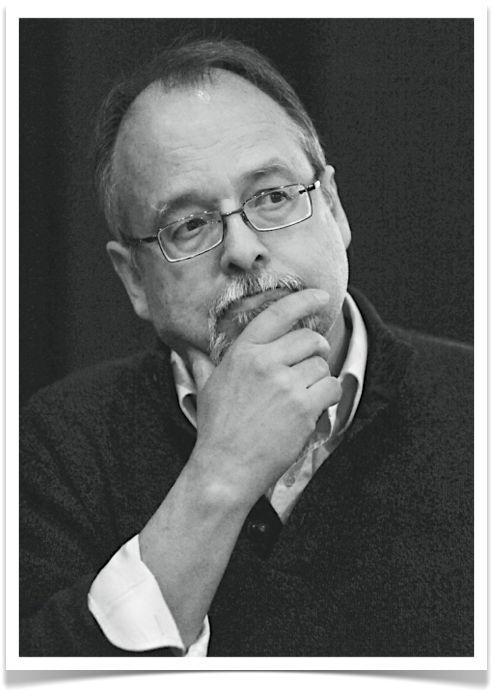
PHOTO CREDIT:
Doug Pyper Photographics
Kaslo, British Columbia
Canada
Email: info@dougpyperphoto,com
Website: www.dougpyperphoto.com
Blog: www.dougpyper.blogspot.com
Linkedin: http://linkd.in/inzITD
Phone: (250)353-2307
Skype: doug.pyper2
Doug Pyper Photographics
Kaslo, British Columbia
Canada
Email: info@dougpyperphoto,com
Website: www.dougpyperphoto.com
Blog: www.dougpyper.blogspot.com
Linkedin: http://linkd.in/inzITD
Phone: (250)353-2307
Skype: doug.pyper2